

October 2026
Welcome readers! So much has happened since our last issue of The Bolt, so we thought it’s time to fill you in. Here, we tip our hand on some important legislative and regulatory updates as well as some opinions about what’s going on in the world of microgrids, cleantech, and sustainable energy.
In this issue of The Bolt, we’ll share our accomplishments from the last couple of months, a robust legislative update following the conclusion of California’s legislative session, some hot takes from our very own Allie Detrio, and a few must-read articles as a cherry on top to your energetic fill from the RP Team.
The past couple of months at Reimagine Power were nothing short of interesting. With so much having gone on, the Reimagine Power Team has continued to fire on all cylinders.
Our Senior Policy Analyst, Zoe Bennett, finished out California’s legislative session with a bang this August and September. Zoe spent ample time refining our master bill tracker to track bills of note that passed to the governor’s desk and were subsequently chaptered or vetoed by Governor Newsom by the end of September. The end of the session was a considerable success, marked by the signing of several landmark bills, including SB 868, SB 905, SB 913, AB 1738, and more. More on bills in our Legislative Update section!
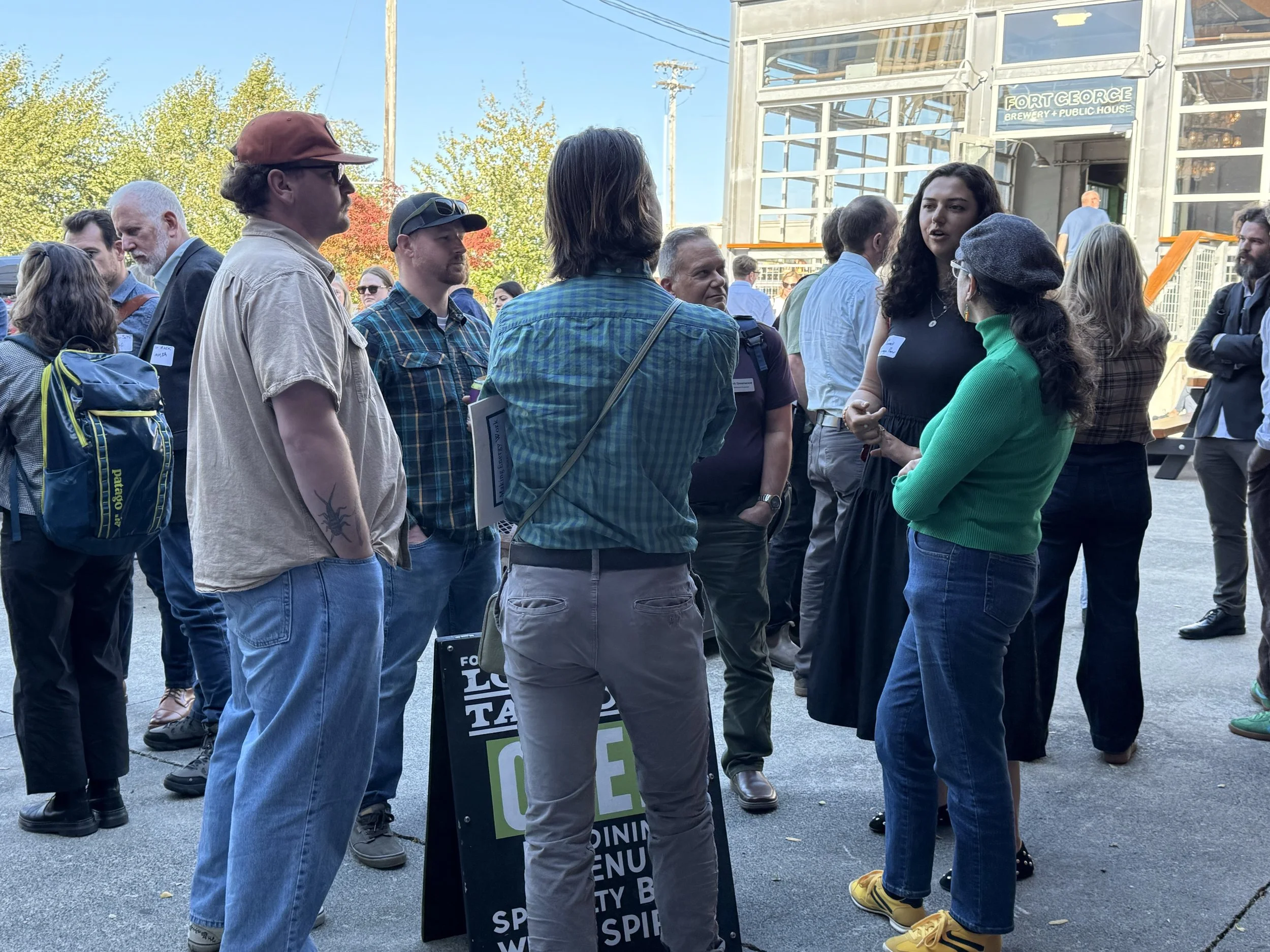
September also brought on some new adventures for the team. Zoe and Allie trekked up to Astoria, Oregon for Sustainable Northwest’s Fall Energy Symposium. There, the two reconnected with familiar faces and made some new friends too. They also spoke further with Oregon emergency management and community organizations about HB 2065 and HB 2066, the community microgrid bills that Reimagine Power continues to engage with as their implementation develops in the state.
In addition to her legislative work, Zoe completed an interconnection guide project for a client in California this August. The fulfillment of this project is propelling her toward a broader clientele in the western states, specifically in the market intelligence territory.

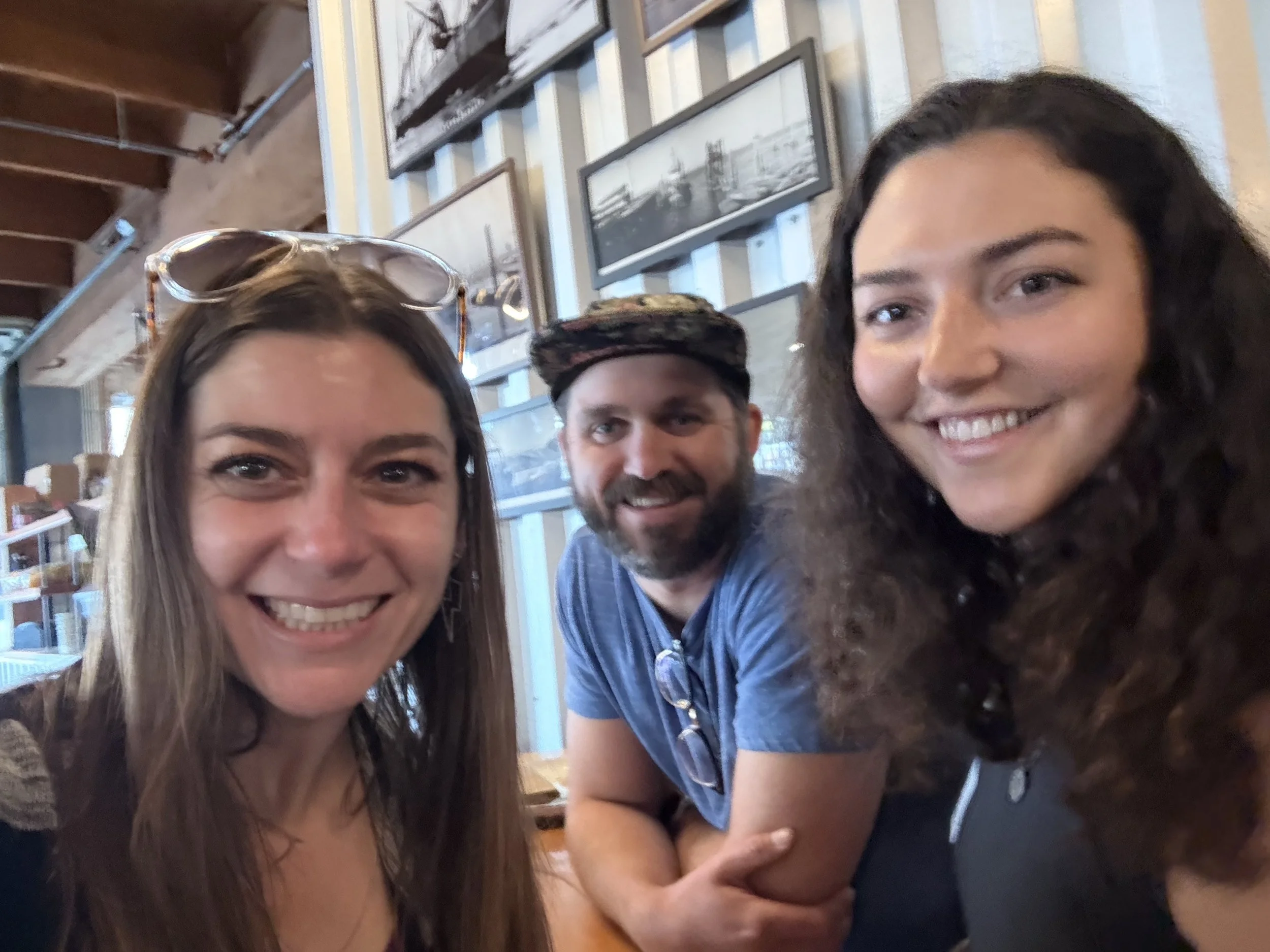
Toward the end of August, we welcomed our newest teammate and Policy Analyst, Karin Krisdiva! With only about a month and a couple of weeks under her belt, Karin has already jumped headfirst into some intriguing networking and policy projects. In September, Karin attended California Women in Energy’s networking lunch in Sacramento, California, on behalf of the RP Team, and has been assisting Zoe and the policy team with projects as we tidied up the end of session. If you’d like to learn more about Karin, her journey, and how she joined the Reimagine Power team, check out this article!
Igor Tregub, our Strategic Partnerships Director & Senior Policy Advisor, worked closely with a broad coalition of stakeholders to craft an ambitious and necessary proposal to help local communities realize California’s climate and water resiliency goals. With guidance from Allie Detrio, our Chief Strategist, he achieved a key milestone in finalizing the proposal. Last month, Igor continued to utilize his skill set by making headway in identifying strategic partnerships and funding sources for a project that will help prepare local jurisdictions, community choice agencies, and public utilities for California’s ambitious electrification goals.
Allie continues leading the charge on microgrid policy and resilience in the West. Her recent work in microgrid legislation and regulatory implementation continues to spark interest in others looking to take leadership in the microgrid movement. Allie’s last few weeks have consisted of staying engaged with key leaders looking to build upon policy successes in the Pacific Northwest. She ended Q3 on a strong note with multiple project closeouts while simultaneously closing in on several new opportunities.
After Oregon, Allie visited Seattle, Washington to attend the International District Energy Association’s Pacific Northwest District Energy Summit. At this event, she met with several Washington state legislative leaders, including House Environment & Energy Committee Chair Beth Doglio, House Capital Budget Committee Vice Chair Lisa Parshley, and House Majority Whip Alex Ramel. She also reconnected with her long-time friend, Rob Thornton, whom she credits with playing a major role in shaping the trajectory of her career. She ventured back up to Seattle in early October for the Solar Washington Summit and got a chance to meet another legislative champion, Senator Victoria Hunt, and reconnect with more of her friends and colleagues in the microgrid and DER space.
Wrapping up summer and the California legislative session has been quite the unique experience in 2026, but the year isn’t over yet. We here at Reimagine Power remain excited knowing there’s always something new around the corner.
With the end of summer came the end of a stimulating two-year-long legislative session in California. 2026 turned out to be a watershed year for energy legislation in many ways as California saw more than a handful of progressive energy bills charge their way through the Assembly and State Senate. Below are some bills of note that our team has closely followed throughout the year.
-
This bill expands access to solar for customers who have been historically left out of the clean energy transition. By exempting portable solar generation devices from interconnection requirements and fees through 2030, the bill opens the California local energy market to more affordable and flexible solar generation options for individuals. SB 868 will particularly benefit renters and multifamily residents by enabling access to balcony solar as a lower-cost alternative to rooftop solar, while giving customers greater autonomy over their systems and associated costs.
Status: Approved and Chaptered on September 30th
-
This bill requires the California Public Utilities Commission to allow aggregated distributed energy resources (DERs), including smart thermostats and other small energy resources, to qualify as Resource Adequacy (RA) capacity. Allowing these resources to compete with traditional generation levels the playing field for DERs to meet grid needs and mitigate unnecessary grid infrastructure buildout. SB 913 aims to put downward pressure on electricity rates, reduce the need for expensive and polluting ‘peaker plants’, and increase reliability when the grid needs power the most.
Status: Approved and Chaptered on September 30th
-
This bill requires cities to offer homeowners and contractors the option of requesting remote inspections for building permits of specified work, including solar and battery installations. Allowing remote inspections streamlines the permitting process for solar and storage interconnection, saving time and money for all parties involved.
Status: Approved and Chaptered on September 18th
-
This bill would have directed the California Public Utilities Commission (CPUC) to create a 5 MW-capped community renewable energy subscription program with a particular focus on low-income households and underserved communities. The bill would have also directed the CPUC and California Energy Commission to evaluate the load-modifying potential of community renewable energy generators. By expanding opportunities for customers who cannot install on-site solar to subscribe to community renewable energy projects, AB 1813 could have broadened participation in the local clean energy transition and supported greater energy autonomy for low-income and underserved communities.
Status: Vetoed on September 30th, Newsom stating that the bill would shift financial costs to ratepayers.
-
The bill originally intended to direct the investor-owned utilities to collaborate with community choice aggregators and governments—both local and tribal—to identify critical circuits to cite microgrid projects. The IOUs would have been required to share transmission and distribution data with local governing entities in order to plan and develop microgrid projects. AB 710 was amended to remove language specifically referring to the placement of microgrid projects, instead directing collaboration to ‘support resiliency planning’. Despite amendments to the bill’s language to make it more broadly palatable, it failed to gain the support needed to pass the second house’s appropriations committee.
Status: Held under submission in the second house Appropriations Committee, indicating the author was unable to garner enough support in committee to get the bill to the floor.
It’s been a great start to Q4, though it’s hard to believe that Halloween (my absolute favorite holiday) and the fall season are already upon us! RP kicked off this quarter with two events in October: the Solar Washington summit in Seattle and the CALSSA annual dinner in Oakland. Both on the heels of two other events in the Pacific Northwest that I had recently attended in late September. Between microgrid legislation and regulation, grid modernization and biomass utilization... whew, there is a lot going on in the PNW these days! It’s been so refreshing to get engaged in some new/emerging markets outside our usual golden state bread and butter... the genuine interest, excitement, and serious demand for these “commonsense” solutions from those on the ground who are really looking to make things happen there is so validating and motivating!
HOT...
The Oregon Public Utilities Commission dropped its first cut of the draft microgrid regulations in AR 681 on October 2nd! I’ll continue my compliments to the PUC from last issue re: California and Resource Adequacy into this one about Oregon and microgrids… I thought the OPUC did a good job capturing all the stakeholder feedback from all the microgrid workshops hosted earlier this year covering four(!) different work streams. No small task to synthesize all that info, let alone do a good job with translating it into a reasonably fair and balanced set of regulatory decisions on such a meaty and weedy issue. We’ll see how the final decision shakes out, but Oregon has definitely been the brightest crayon in my box lately.
Comments on AR 681 draft microgrid regulations are due on October 21st. It’s likely that another round of stakeholder comments may be solicited before the first phase of microgrid regulations are finalized in March 2027; reach out if you wanna get involved!
NOT...
Amongst all the exciting projects and client engagements, I was particularly stoked on my most recent endeavor in community microgrids. Think Sunnova microutility concept, but off-grid and in a well-known public utility territory that was probably going to take 7+ years to bring power to this new home development in SoCal… Even though I was very aware of the possibility that this novel project would not move forward, I have to say, it was still quite a frustrating moment closing out this key client project on such a harsh note.
After so many promising developments and positive affirmations since I started working on this project a year ago, I got more than a little optimistic about the opportunity for new home communities, real estate developers, and public utilities that was in front of us all.
And then we met with the GM and their outside counsel…
That meeting was, without a doubt, one of the craziest, most obnoxious of my entire career! I’ve had my fair share of those, so that’s really saying something. I have never been personally/professionally attacked or had such absurd and baseless accusations hurled at me like this before. I’ve been yelled at and talked over in meetings before, but nothing like this… All within the first 3-5 minutes of the meeting. 15 minutes or so in, the warning came that “others have tried to do this and we have and will sue, and win every time." Then, the threat was made. I was told, “do not dare try to build this project in our service territory”. The rest of the meeting was more railroading and yelling (yes, yelling) over every single participant who tried to speak in this meeting, not just me, including this lawyer’s own client! Long story short, the hired gun was brought in to shoot this project down, and was ultimately successful… for now.
This project really would have been a game changer for microgrids, housing and real estate developers, and utilities alike, if it had been able to move forward as planned, and if not for the ambiguity of century old laws that are long outdated and are now simply a weapon designed to stifle competition and impede progress. When utilities are not able to provide electric service and interconnect new residential communities to the power grid in a reasonable timeframe—say two, maybe three years—they should not be blocking other solutions that can provide clean, reliable, affordable power to those homes. If a utility is fundamentally not able to uphold its obligation to serve, it should at least uphold its duty to the public interest and let others provide service if they are able to… no matter how novel the solution in question may appear to the status quo.
While I was definitely prepared for this potential outcome, it was still so disappointing. The drama that ensued put a finer point on things. Instead of deterring me, it simply fueled my motivation to make it happen... one day.
Whew… The Deja vu is real.
SPICY FINISH
Meanwhile in the PNW, we have one state in the regulatory implementation phase of modernizing these exact antiquated rules to explicitly allow for the development of projects like this one I’m describing (Oregon) AND another that is proactively looking to follow in their footsteps to pass their own state laws to change these same rules (Washington), which will showcase true political leadership with microgrids at the forefront of their state energy policy agenda. So yeah… I am anything but deterred, though sometimes it is tough to keep from becoming jaded in heavy moments like these. But when one door closes, another always seems to open. Exciting times ahead… power forward!
-Allie D
It’s important to stay on top of what’s happening across the industry. Below are a few relevant reads we thought important enough to share.
PG&E Warns of More Shutoffs as Fire Conditions Continue Threatening California Grid
Senator Allen ‘deeply troubled’ by Californian Utility Threats
$700M Microgrid Bill has State Energy Office and Electrical Manufacturer Support
Pescadero Community Solar Microgrid Could Aid Outage Resilience
California Declines Funding for its Biggest Virtual Power Plant
Federal Energy Regulatory Commission's Push for Speed to Power in Large Load Integration
Affordability Concerns Drive Momentum for Performance-Based Ratemaking
US Gas and Electric Utilities Request Significant Spike in Rates (in Q3)