

THE BOLT
The Bolt is back! Welcome, readers, to the newest edition and long-awaited return of The Bolt, Reimagine Power’s newsletter that gives you everything from legislative and regulatory policy updates to RP’s hot takes on what’s happening in the world of microgrids, cleantech, and sustainable energy.
Allie and Christine started The Bolt years ago in a novice and honest way, and it was a big success among colleagues and collaborators. With great work comes great responsibility, and Allie’s core duties as CEO & Chief Strategist of RP had to take precedent, so the newsletter sadly had to take a backseat over the years. With the help of our entire team and their diversity of experience and perspectives, we are very excited to bring The Bolt back better than ever! Same deep roots, same sizzling hot takes, new and improved look.
In this issue of The Bolt, we share some must-read news articles, capture some lightning in a bottle with the latest energy policy updates from the RP team, featuring key bills and proceedings we are tracking across the West, plus candid perspectives on all of the above from our very own Chief Strategist, Allie Detrio, and her hot takes.
From legislative and regulatory work to clientele acquisition and project delivery, the Reimagine Power Team has been deep in the weeds as of late. As we wrap up the first half of the year, our team and workload have evolved in both anticipated and unexpected ways, with each day offering new lessons to be learned. Nonetheless, the team remains steadfast and hard at work on whatever is thrown our way, and we are thrilled to ring in the second half of 2026!
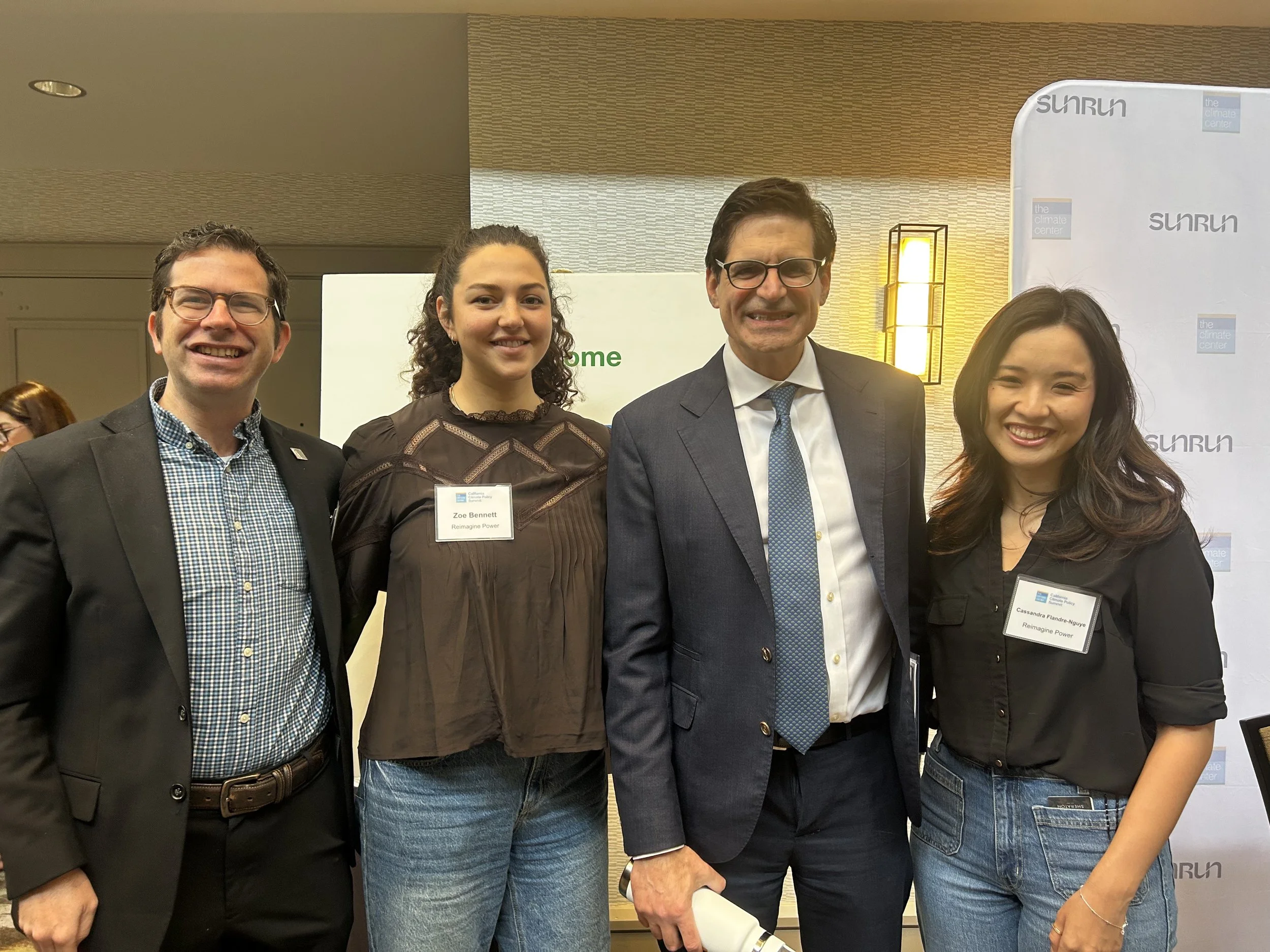
Zoe Bennett, our Senior Policy Analyst, has been hard at work this past quarter on her legislative and regulatory projects.
Through the quarter, she fervently engaged with coalition partners on bills such as SB 913, a resource adequacy (RA) bill, and AB 710, a bill on utility-government microgrid partnerships. Zoe has seen her work become a whirlwind as many bills of note underwent significant amendments in their respective committees, e.g., AB 2175 (Garcia).
Lately, Zoe has been monitoring and engaging with both bills and coalition partners as all bills are currently moving through their second-house committees.
Beyond California, Zoe continues to track legislative developments across the West. In Colorado, she provided regular engagement and updates on HB 1051, which Governor Polis signed into law in June. The bill permanently continues the Microgrid Community Resilience Grant Program, providing ongoing support to rural electric cooperatives and municipal utilities to procure microgrid resources that strengthen local resilience.
In addition to her legislative work, Zoe has also been immersed in regulatory events. She has been following the High Distributed Energy Resources (DER) Proceeding in the California Public Utilities Commission (CPUC) while engaging in AR 681, the Oregon Public Utilities Commission (OPUC) proceeding to develop a statewide framework for community microgrid development and implementation per the victories of HB 2066 and HB 2065 last summer. The proceeding is bringing together utilities, state agencies, developers, and other stakeholders to establish recommendations for microgrid planning, interconnection, and compensation mechanisms to support broad deployment across Oregon.
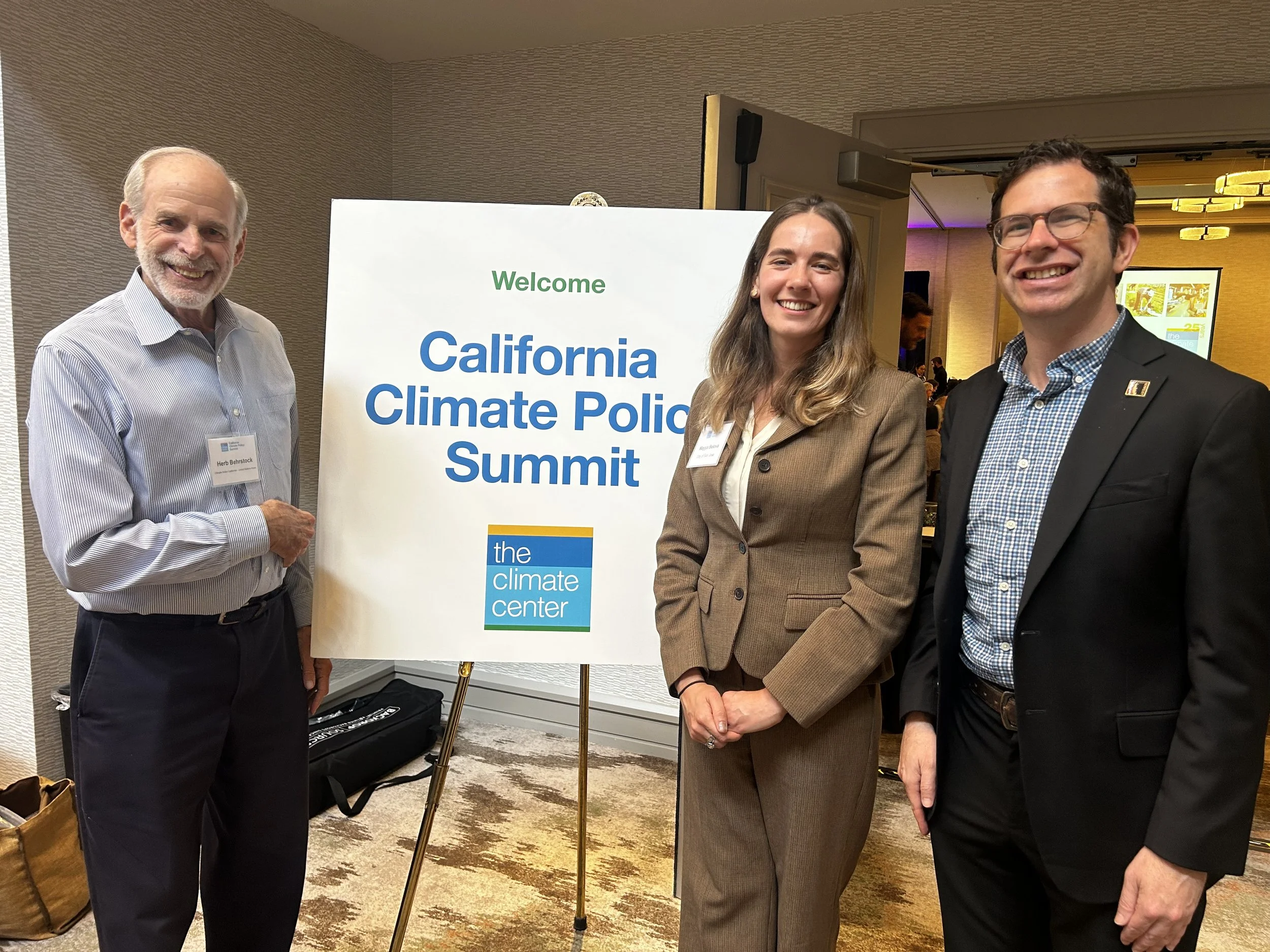
Our Strategic Partnerships Director & Senior Policy Advisor, Igor Tregub, trudges knee-deep in his coalition-building efforts. In April, Igor continued to build a strong coalition in support of the first major effort in recent history to pass microgrid legislation in California, where over 75 sign-ons were received in under 24 hours.
Much of Igor’s recent work has also included hosting, participating in, and mediating several events and panels throughout the past few months.
Igor co-created a conference, Accelerating the Transition, that kicked off San Francisco Climate Week in April, and mentored a brilliant youth cohort during Los Angeles Climate Week. Igor also attended The Climate Center’s Policy Summit and Lobby Day with the rest of our team and hosted Citizens’ Climate Lobby’s Berkeley Electrification Fair and Wild & Scenic Festival.
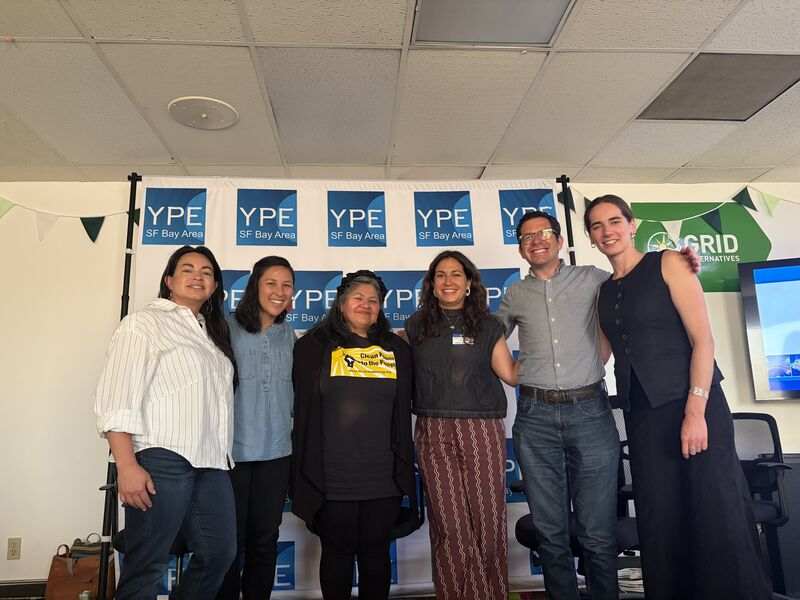
As a local elected official, Igor participated in the U.S. Green Building Council’s conversation with elected officials on building decarbonization policy in the state. In collaboration with Young Professionals in Energy, he also moderated an energy justice panel at the GRID Alternatives office in Oakland, California.
Selena Feliciano and Will Vochelli, our marketing leads, have been hard at work behind the scenes on all things marketing and communications! Recent projects for the team have included campaign execution, completing client deliverables, crafting the long overdue revival of this very newsletter, and working in tandem with Christine Hutchison, our Chief Administrative Officer, to rejuvenate our company website that is now live.
Christine has worked overtime and aiding the marketing team to give the RP website a facelift! She took the lead on website design and gives many thanks to the internal marketing team for their sage and brilliant advice throughout. Christine continues her duties as “back-of-the-house manager” and supporting the team as we take on new and exciting clients and projects. Some of her proudest moments in 2026—so far—have been witnessing the team elevate their skills and maximize their time and work with the help of updated processes and internal supports.
Last but not least, our Chief Strategist and fierce leader, Allie Detrio!
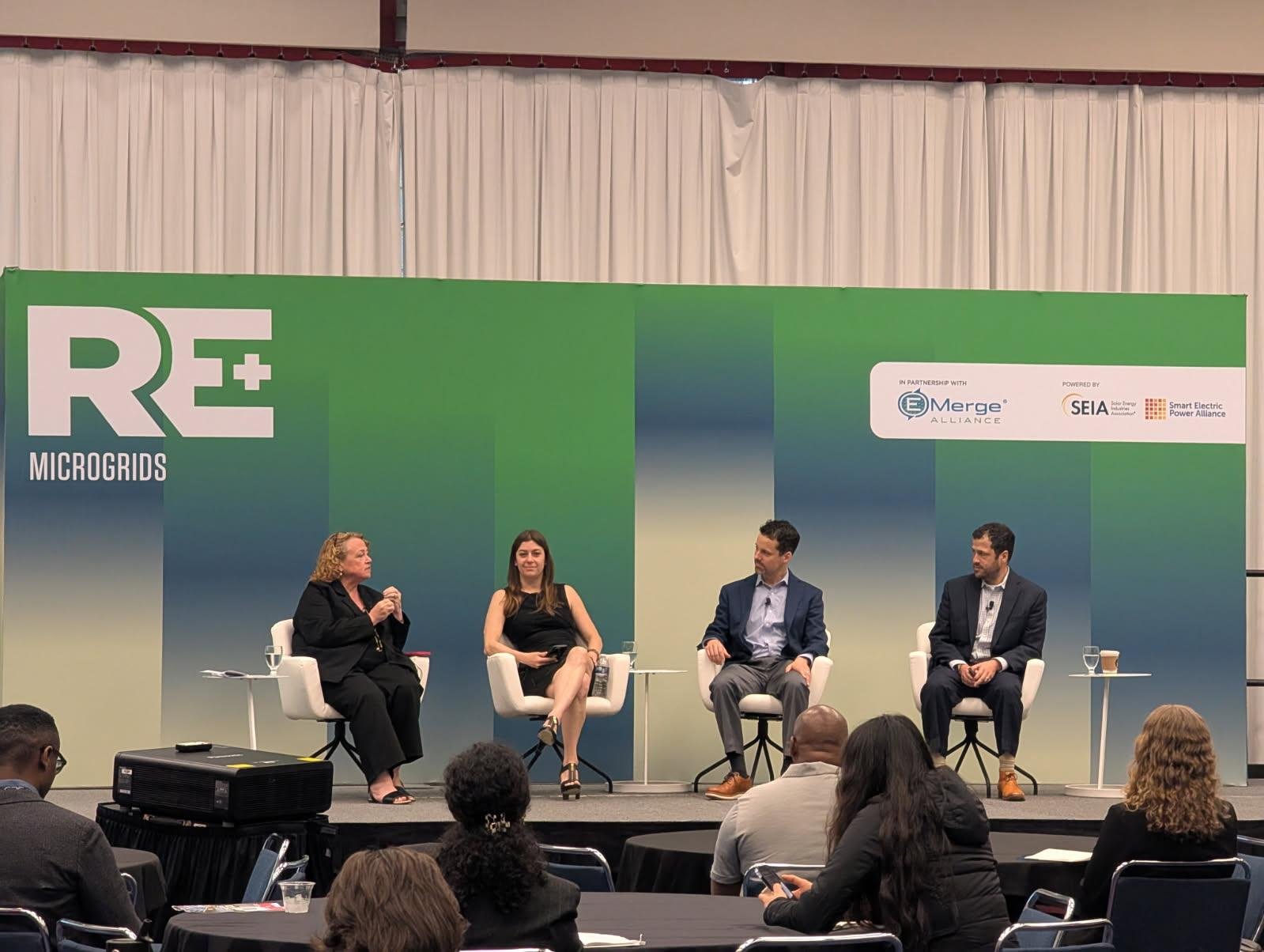
Allie has been leading the team in numerous projects, engaging with clients, hitting key milestones, and driving new business to the firm. June and July alone provided Allie with the opportunity to touch nearly every corner of the energy industry: analyzing and strategizing small DER interconnection procedures in California, mapping transmission capacities for future projects in the Pacific Northwest, community resilience valuations and microgrid service rate proposals in Oregon, and digesting demand response tariffs and RA rule changes in California.
Allie reflects with gratitude and pride as we close the door on Q2 of 2026.
It’s hard to believe that the first half of the year has already come to a close, but the RP Team remains invigorated for any set of projects coming our way.
With energy bills remaining a hot topic in the California Legislature, big changes can happen in small windows of time. Below are a few key bills currently circulating in the legislature that have shown prominence.
-
AB 710 (Irwin) - Microgrid Projects
This bill was amended to encompass microgrids in the last few weeks; AB 710 sets out to require large electrical corporations to collaborate with governments or community choice aggregations (CCAs) within their service areas to identify critical circuits and microgrid projects. If passed, it would also require said corporations to share transmission, distribution, and customer data with government entities to plan future microgrid projects. As California faces a growing need for community resilience, this bill plans to reduce barriers for local governments to receive data from utilities in a timely manner to identify where microgrids can provide the greatest benefits.
Status: Heading to Senate Appropriations Committee -
SB 905 (Becker) - Electricity Costs & Utility Profits
This bill aims to fix the incentive structure for utilities' profits. It would direct the California Public Utilities Commission (CPUC) to establish clear performance metrics for reliability, system utilization, greenhouse gas reductions, and wildfire risk mitigation, and require the commission to consider assigning a reduced rate of return on equity for specified capital costs. The bill intends to align incentives to optimize existing infrastructure and combat rising costs for ratepayers.
Status: Awaiting hearing in Assembly Appropriations Committee -
SB 913 (Becker) - Resource Adequacy: Aggregated Distributed Energy Resources
This bill will create a viable pathway for distributed energy resources (DER) to fairly compete in offering lower-cost capacity reserves to support the reliability of the electric grid. As energy use rises, utilities need to raise peak demand to reach peak usage days. Thousands of megawatts of customer-sited storage are not being included in resource adequacy (RA). SB 913 allows DERs to participate in RA to improve grid utilization by leveraging existing customer-sited capacity.
Status: Awaiting hearing in Assembly Appropriations Committee -
AB 1738 (Carrillo) - Remote Inspections
This bill will require cities to offer homeowners virtual inspections for simple, low-risk building projects. These remote inspections can accelerate new home construction and streamline building electrification and installation of on-site solar and storage systems. The legislation will help resolve a major bottleneck in residential project completion by reducing scheduling delays, enabling faster system energization, and lowering administrative burden for both homeowners and local building departments.
Status: Awaiting hearing in Senate Appropriations Committee -
SB 868 (Wiener) - Plug-in Solar Act
This bill cuts regulatory red tape to allow Californians to easily install plug-in solar units at home. The bill expands access to affordable clean energy for renters and households who cannot install rooftop solar. The legislation is intended to reduce electricity costs and simplify installation, empowering customers to lower their rates and participate in the transition to a clean energy future.
Status: Awaiting hearing in Assembly Appropriations Committee
Whoever said you couldn’t catch lightning in a bottle?!? Well whoever it was, they were wrong… that’s right, Da Bolt is Back!!!
Welcome back, and thank you all for your ongoing support and loyal readership! ⚡️
What’s hot and what’s not? Well, for my take on this dish… I’ll start with the HOT, flip it to the NOT, COOL it down with a splash, and give it a SPICY finish… 😎
HOT...
Fresh off the dais is the CPUC’s recently approved Resource Adequacy (RA) Decision adopting some pretty significant changes to the RA program in Track 1 (of the newish successor proceeding) with some major implications for energy storage in particular, and demand response (DR) by association. Basically, energy storage can’t count degraded battery capacity towards RA requirements like they used to. Now, batteries gotta discharge at full capacity and prove it... for Reliability Reasons.
Oh, and they are creating a new longer duration energy storage valuation framework that will incentivize resources that can provide capacity beyond that 4 hour tipping point… I had that exact same idea and proposed the concept to both the CPUC and CEC years ago in at least three different proceedings I was actively participating in at the time… Needless to say, I’m stoked to see this concept finally getting its day in the market.
DARE I SAY… I actually think the CPUC came to a relatively reasonable and balanced decision in this one?!?! Without their usual blatant deference to the IOUs?!?! Maybe it’s just because I’m not so deep in the regulatory weeds these days but either way, I gotta give credit where it’s due… while also holding my breath because it is so fresh and the impacts are still to follow. It will be interesting to see how this decision actually plays out on the ground and in the market over time. This likely isn’t my last word on this, and I could very well have to eat some of ‘em later…
NOT...
The Governor and the Legislature finalized the State Budget at the end of June and it is NOT HOT. What a roller coaster we’ve been on these past few years! So even though it was no surprise to me that more budget cuts were coming and the tiny bit of $$$ that was left specifically for new DER infrastructure was taken away (DEBA), even though it was also codified by the voters (via Prop 4 ballot measure allocation), I was still a bit surprised to see how quickly advocates jumped on the idea of robbing Peter to pay Paul to save DSGS for one year leaving DEBA with no $$$. It was also surprising given that the DER solicitation has finally started moving again (after years of stalling). My personal take is that this move essentially puts the future of the ONE incentive program the DER industry has available in CA to actually fund NEW DER ASSETS in jeopardy.
I think the writing is on the wall with this one... It's just a matter of time before that budget trailer bill that will transition DSGS customers to ELRP actually gets enacted by the state. The CPUC doesn’t like having their rate-making authority diminished at all, whereas they will cede some incentive making and program admin responsibilities to the CEC.
ON THE BRIGHT SIDE...
In a perfect world, hell, even a halfway decent one, we would have both programs exist. Admin by the CEC fully funded, with budgets slated to increase year over year until we have papered the state with microgrids, and resiliency solutions have been deployed in every community in CA. We shouldn’t have to pick between two programs that fundamentally serve different purposes (funding assets vs performance) and are effectively forced to cannibalize one to prop up the other. Because the alternative to that (if we want to keep the asset/project funding in place) is to try and make storage/VPP business models fit into other sparsely and underutilized DR programs that didn’t really contemplate battery storage or DER aggregation when originally designed.
Maybe the next Governor will take DERs and microgrids more seriously: The solution to so many of our power sector problems and empower them to serve the people of CA starts with rebalancing the state energy budget and allocate DERs a much bigger share of the pie. There is sooo much more they could do for the power system, and so many additional benefits to be realized by customers and communities, if only…
COOL DOWN...
Yours truly is incredibly stoked to wade back into the wacky, wild world of Water. I am getting more involved and reuniting with my first love interest of this long, strange and crazy career: water policy! Different state, different policy objectives, different hat on... same great taste.
SPICY FINISH...
We’re expanding our footprint further up the north coast in the PNW! We are excited to bring on another client in Oregon, in addition to our ongoing engagement in the Microgrid proceeding AR 681 at the OPUC, which kicks off its formal rulemaking early this coming fall. All us stakeholders and regulators have been simmering on a flavorful, saucy communal stock pot, with a variety of freshly ripe CMG policy ingredients added over these past few months to get us through to this point.
ALSO, RP is gonna turn it up a notch even further by adding a new market to its roster very soon: the state of Washington! Stay tuned 😉
Lots of exciting endeavors in the works and on the horizon for the RP team! Look forward to sharing more bolts and flashes of clean energy & resiliency policy action with yall! Feel free to share and/or send us a note if you want on Da List… For now, gotta Bolt!
- Allie D
It’s important to stay on top of what is happening in the industry. Here are a few must-reads that we’ve found impactful.
Wildfire Survivors’ Anger as Utility-Funded Group Claims to Represent Victims
California Pulled the Plug on New Air Conditioners for Schools
States Making it Harder to Save Money with Solar Power
CalCCA Challenges CPUC Decisions That Shifted More Than $1 Billion Onto CCA Customers
How Community-Led Microgrids are Rewiring the Grid
Residential Energy Giants Collaborate to Boost Grids for AI Demand
United States Utilities Rethink Generation as AI Data Centers Grow
California Assembly Utilities & Energy Committee Advances Historic Plug-In Bill
CalCCA Urges CPUC to Fix Flawed Resource Adequacy Proposal Before It Raises Costs and Risks Reliability for Millions of Californians
PG&E’s Nuclear Power Plant in Diablo Canyon Permitted Continued Operations
California Notifies Trump of Intent to Sue in Light of Offshore Wind Cancellations
Wildfire Victims Forbid Newsom of Accepting Backdoor Deals with Utilities